 The EUREQA dataset
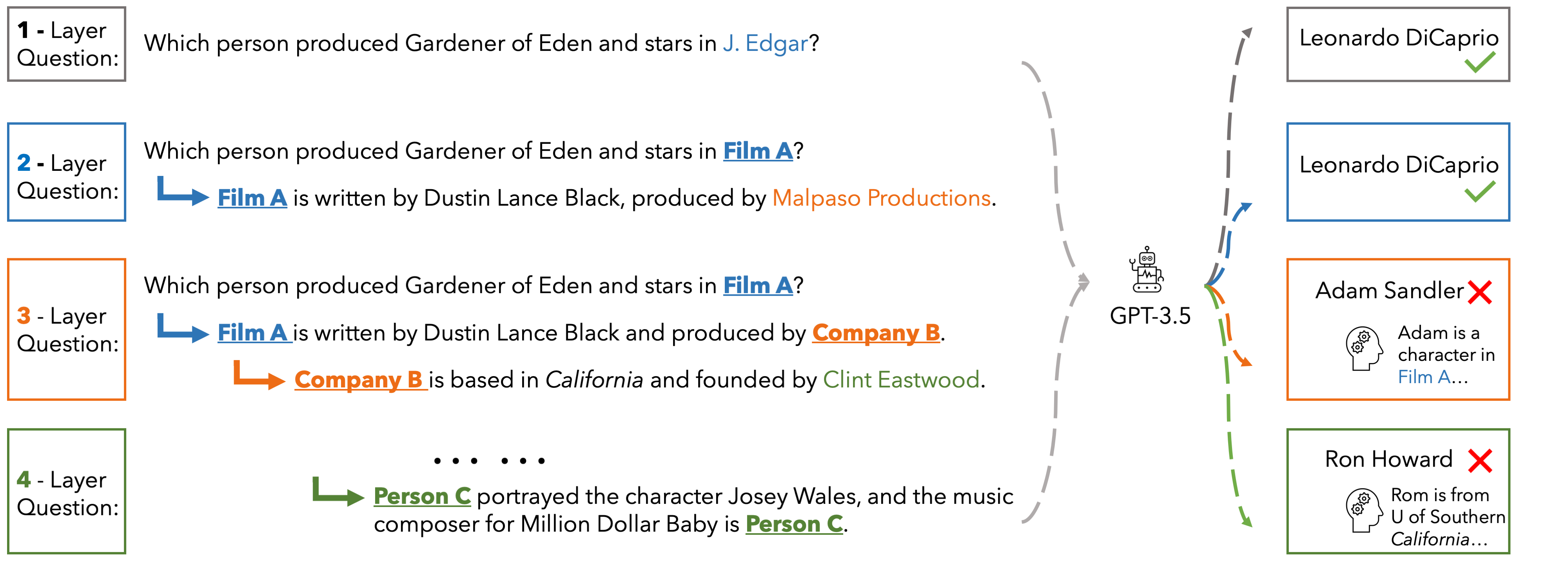
In EUREQA, every question is constructed through an implicit reasoning chain. The chain is constructed by parsing DBPedia. Each layer comprises three components: an entity, a fact about the entity, and a relation between the entity
and its counterpart from the next layer. The layers stack up to create chains with different depths of reasoning. We verbalize reasoning chains into natural sentences and anonymize the entity of each layer to create the question.
Questions can be solved layer by layer and each layer is guaranteed a unique answer. EUREQA is not a knowledge game: we adopt a knowledge filtering process that ensures that most LLMs have sufficient world knowledge to answer our questions.
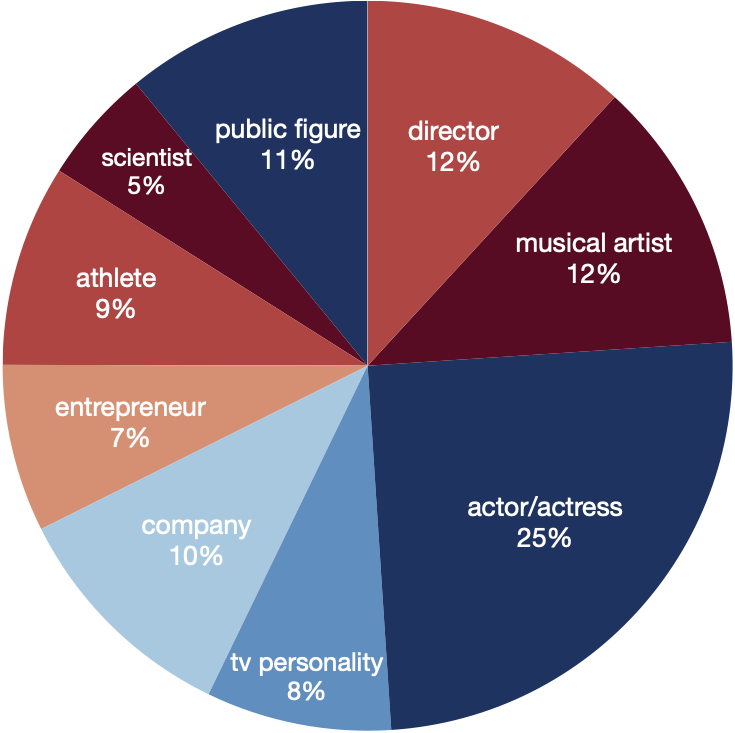
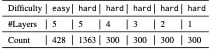
EUREQA comprises a total of 2,991 questions of different reasoning depths and difficulties. The entities encompass a broad spectrum of topics, effectively reducing any potential bias arising from specific entity categories.
These data are great for analyzing the reasoning processes of LLMs
 Performance
Here we present the accuracy of ChatGPT, Gemini-Pro and GPT-4 on the hard set of EUREQA across different depths d of reasoning (number of layers in the questions). We evaluate two prompt strategies: direct zero-shot prompt and ICL with two examples. In general, with the entities recursively substituted by the descriptions of reasoning chaining layers, and therefore eliminating surface-level semantic cues, these models generate more incorrect answers. When the reasoning depth increases from one to five on hard questions, there is a notable decline in performance for all models. This finding underscores the significant impact that semantic shortcuts have on the accuracy of responses, and it also indicates that GPT-4 is considerably more capable of identifying and taking advantage of these shortcuts.
| depth | d=1 | d=2 | d=3 | d=4 | d=5 | |||||
| direct | icl | direct | icl | direct | icl | direct | icl | direct | icl | |
| ChatGPT | 22.3 | 53.3 | 7.0 | 40.0 | 5.0 | 39.2 | 3.7 | 39.3 | 7.2 | 39.0 |
| Gemini-Pro | 45.0 | 49.3 | 29.5 | 23.5 | 27.3 | 28.6 | 25.7 | 24.3 | 17.2 | 21.5 |
| GPT-4 | 60.3 | 76.0 | 50.0 | 63.7 | 51.3 | 61.7 | 52.7 | 63.7 | 46.9 | 61.9 |
, device flashing, and software unlocking. The "onlineaplicaciones" section (often accessed via gsmprime.online/aplicaciones
Es la herramienta estrella del portal. Permite a los técnicos realizar desbloqueos de pantalla, saltar verificaciones de seguridad de cuentas de Google (FRP) tras un restablecimiento de fábrica y gestionar el arranque del sistema en dispositivos modernos.
In the rapidly evolving world of telecommunications, the ability to manage mobile devices, applications, and network connectivity remotely is no longer a luxury—it is a necessity. Whether you are a small business owner tracking company phones, a parent monitoring device usage, or a tech enthusiast wanting to automate tasks, you have likely encountered the need for a robust management platform. gsmprime onlineaplicaciones
GSMPrime is a powerful, centralized management software designed primarily for (also known as VoIP GSM gateways). It allows administrators to control multiple SIM cards, routers, and telephony devices from a single dashboard.
Debido a que el software de servicio técnico interactúa con las capas más profundas del hardware móvil, se deben seguir protocolos estrictos para evitar daños en los teléfonos o brechas de seguridad en la PC del usuario. 1. Gestión de Falsos Positivos del Antivirus , device flashing, and software unlocking
While GSMPrime focuses on SIM management, its API allows integration with Mobile Device Management (MDM) tools. Through , administrators can push configurations to Android devices (APN settings, Wi-Fi passwords, lock screens) remotely.
You will need a , a compatible USB cable , and the target Android device. It is highly recommended to temporarily disable your antivirus software or create an exception folder, as many security programs flag FRP tools as Potentially Unwanted Programs (PUPs) due to their nature of modifying system security. In the rapidly evolving world of telecommunications, the
If you’re still managing GSM gateways via serial cables or outdated Windows software, it’s time to go online. The future of GSM control is already here—and it runs in your browser.
This website is adapted from Nerfies, UniversalNER and LLaVA, licensed under a Creative Commons Attribution-ShareAlike 4.0 International License. We thank the LLaMA team for giving us access to their models.
Usage and License Notices: The data abd code is intended and licensed for research use only. They are also restricted to uses that follow the license agreement of LLaMA, ChatGPT, and the original dataset used in the benchmark. The dataset is CC BY NC 4.0 (allowing only non-commercial use) and models trained using the dataset should not be used outside of research purposes.