Loading...
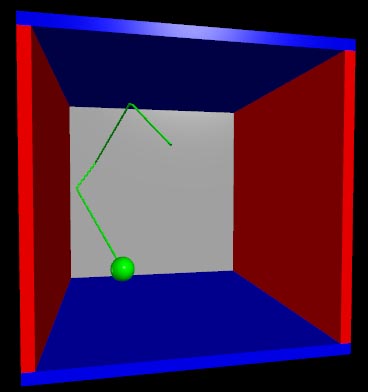
VPython is an easy-to-use, powerful environment for creating 3D animations.
Here at glowscript.org (or webvpython.org, which takes you here),
you can write and run VPython programs right in your browser, store them in the
cloud for free, and easily share them with others. You can also use VPython with installed Python:
see vpython.org.
The Help provides full documentation.
Welcome to VPython, a Trinket tutorial, is useful for anyone new to programming in VPython.
See the
Example programs.
To get started writing your own programs you need to Sign in.
You are signed in as
username and your programs are
here.
Your files will be saved here, but it is a good idea to backup
your folders or individual files occasionally by using
the download options that are provided.
Mmana-gal Antenna Files !!top!! Guide
This public link is valid for 7 days and shares a thread, including any personal information you added. This link or copies made by others cannot be deleted. If you share with third parties, their policies apply. Can’t copy the link right now. Try again later.
You do not always have to start from scratch. One of the greatest benefits of MMANA-GAL is its massive global community, which has logged decades of collective design work. The Built-In Library
One of MMANA-GAL’s most potent features is its automated optimizer. If you download an .maa file designed for 14.150 MHz but want to use it exclusively for the FT8 digital frequency at 14.074 MHz, you can let the software rewrite the file for you. mmana-gal antenna files
There are two primary ways to work with MMANA-GAL files: using the built-in graphical interface or editing the raw text code.
MMANA-GAL antenna files are more than just raw numbers; they are the blueprints for elite station performance. By mastering the structure of .maa files, leveraging the built-in library, and utilizing the automatic optimizer, you can confidently predict how your antenna will perform before you ever cut a single piece of wire or buy an aluminum tube. This public link is valid for 7 days
Inductive coils or capacitive loads added to the wires.
The core of the file is the geometry table. Each wire is defined by its start and end points on a 3D Cartesian coordinate system ( ) along with the wire radius. Can’t copy the link right now
MMANA-GAL antenna files are the data blueprints used by the MMANA-GAL software, a popular tool based on the "Method of Moments" (MININEC engine) for modeling and analyzing wire antennas. These files allow amateur radio operators and engineers to define, share, and optimize antenna designs before ever cutting a piece of wire. Core File Formats
Go to the tab to set your ground type and material (e.g., copper, aluminum). File > Save As to generate your .maa file. Method B: Scripting and Text Editing
If you download an .maa file designed for 144 MHz and want to use it on 430 MHz, do not just change the frequency number in the file. You must use MMANA-GAL's internal ( Edit > Scale ) so that all physical wire lengths and spacings compress proportionally. Summary Checklist for .maa File Success What to Check Why It Matters File Verification Ensure file ends in .maa , not .txt . Software won't recognize raw text extensions. Source Check
Click the Start button. The software will process the data. Analyze Results: Review the output data, focusing on: SWR: Is it close to 1:1 at your target frequency? Gain (dBi): How well does the antenna focus radiation?