
LOADING
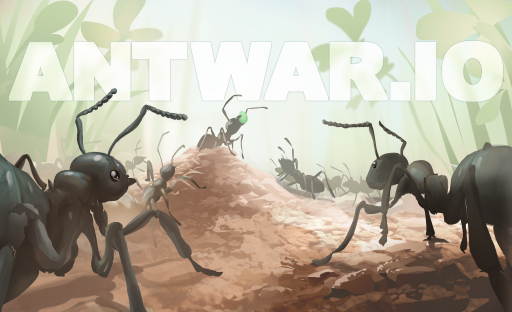
AntWar.io is a fun multiplayer IO game where you play as an ant. Defend your colony and defeat your enemies. Build your ant empire and work with other players to win. AntWar is the best ants .io game available for free, better than all other online ant games!
Forage for food, hunt for bugs and insects, defend your queen, and grow your colony. AntWar.io is inspired a bit by other ant games, but a lot of the inspiration comes from ants in real life. Ant wars, aphid farming, etc. are all something ants do naturally!
If you are interested in learning more about ants or ant keeping check out r/antkeeping on Reddit.
AntWar.io is owned and developed by Bombsight Games. We can be contacted there or by emailing .
Feel free to contact us with ideas you may have!
Memorizing isolated onyomi and kunyomi lists is highly inefficient. Instead, memorize the vocabulary words provided in the textbook. For example, instead of just learning that 生 can be read as sei or nama , learn the words and 生き物 (ikimono - living thing) . 3. Implement Spaced Repetition (SRS)
The book is organized into structured lessons that build upon one another. Each chapter is designed to be completed in a single study session. 1. The N5 Section (Foundational Characters)
Nihongo Challenge Kanji N4-N5 is a comprehensive textbook published by Ask Publishing Nihongo Challenge Kanji N4 N5 Pdf
While the physical book is often preferred for its layout and writing practice, many learners look for a for portability.
Illustrations showing how each kanji originated to aid memory. Detailed Charts: Displays stroke order, space for writing practice, (katakana) and (hiragana) readings, and common compound words. Practice Exercises: Memorizing isolated onyomi and kunyomi lists is highly
Simply reading through the pages of a textbook is rarely enough to achieve fluency. To get the absolute most out of your Nihongo Challenge material, integrate it into a broader study ecosystem: 1. Pair it with Spaced Repetition Systems (SRS)
Unlike traditional, rigid character dictionaries, this textbook uses a visual and contextual approach. It teaches you how to recognize, write, and actually use and roughly 1,000 basic vocabulary words . Key Book Specifications Target Levels: JLPT N5 and JLPT N4 Total Kanji Covered: 312 characters Structure: 31 distinct, manageable lessons rigid character dictionaries
Digital vs. Physical: The Search for a "Nihongo Challenge Kanji N4 N5 PDF"
Your (Do you prefer physical writing, digital apps, or textbook reading?) Your exam timeline (When do you plan to take the JLPT?) Share public link