KNOW HOW, KNOW WHY, GET TRAINED
(941) 730-6576

At the heart of any effective safety program is a constant effort to ensure that employees have the proper knowledge and skill for all aspects of their job. Rigging and lifting clearly is an operation that has been shown to require knowledge and skills. Accidents also can harm your companies’ brand and reputation. Having a well-trained lift team can help mitigate, and possibly eliminate some of the hazards associated with using cranes. A safe lift depends on a number of people filling roles including operators, riggers, journeyman riggers, signal persons, crane owners, crane users, lift directors, supervisors, and the communication between those people.
A qualified person as to whether it constitutes a hazard. And if so, what additional steps need to be taken to address the hazard and how it can be eliminated. And, shall have a thorough education, training, experience, skill and physical ability, as necessary, be competent and capable to perform the functions as determined by the employer or employer’s representative. Sling working load limits (WLL) are based on items being in acceptable condition before being used per ASME B30.9, OSHA 1910.184 and the manufacturer’s recommendations and limitations for use.
The MAXIMUM load that shall be applied in direct tension to undamaged straight length of a sling or hoisting equipment.

Are of the utmost importance and anyone purchasing and using items must understand all warnings and other information on the product being used. Products are sold with express understanding that the purchaser is thoroughly familiar with the correct application and safe use for which they were intended.
Any product will break if abused, misused or overused. Any well-designed and well-built product can become a hazard in the hands of careless users. It is impossible to list all of the possible dangers and misapplications associated with the use of products.

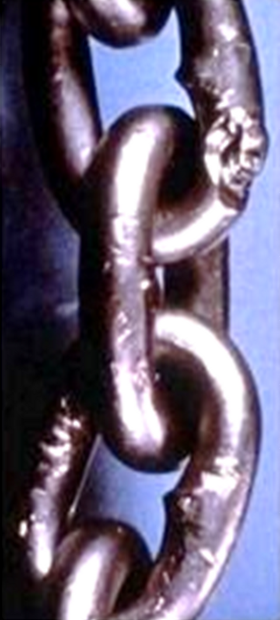
With the following information on the tag
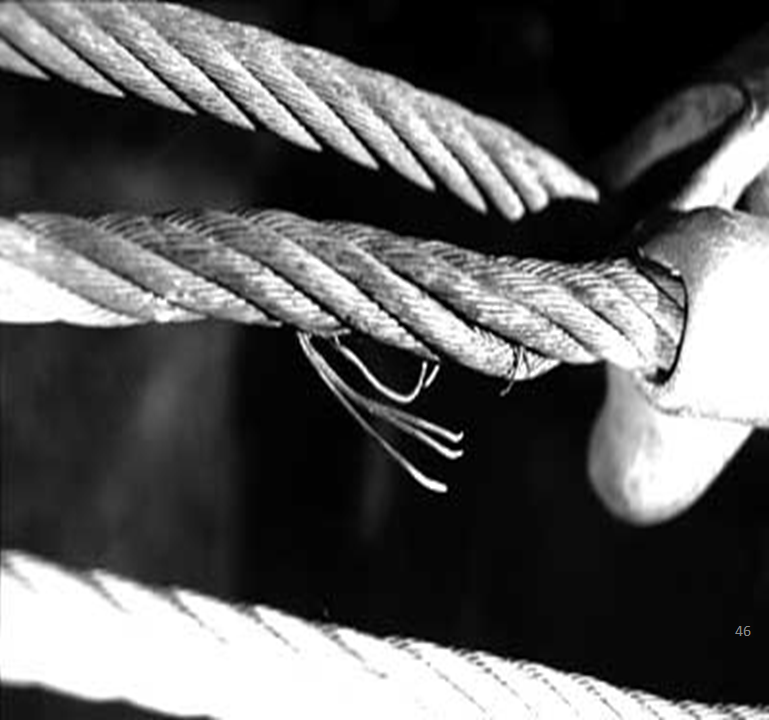
This happens when wire fractures between the strands coming from the core it is usually caused by a shock load
Just 1 broken wire requires the sling to be removed from service!




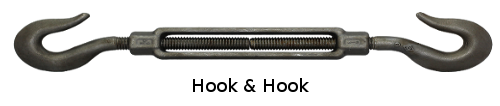
| WORKING LOAD LIMIT (lbs.) | ||
| End Fitting Types | ||
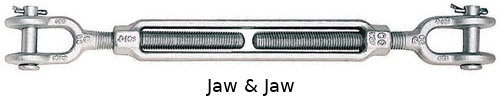
| Size (Inches) | Hook & Eye Hook & Hook | Eye & Eye Eye & Jaw Jaw & Jaw |
| 1/4 | 400 | 500 |
| 5/16 | 700 | 800 |
| 3/8 | 1,000 | 1,200 |
| 1/2 | 1,500 | 2,200 |
| 5/8 | 2,250 | 3,500 |
| 3/4 | 3,000 | 5,200 |
| 7/8 | 4,000 | 7,200 |
| 1 | 5,000 | 10,000 |
| 1-1/4 | 6,500 | 15,200 |
| 1-1/2 | 7,500 | 21,400 |
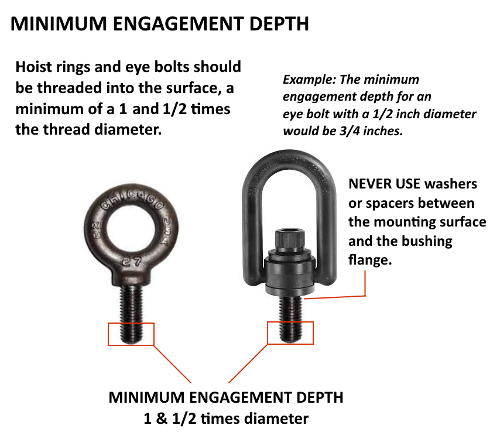
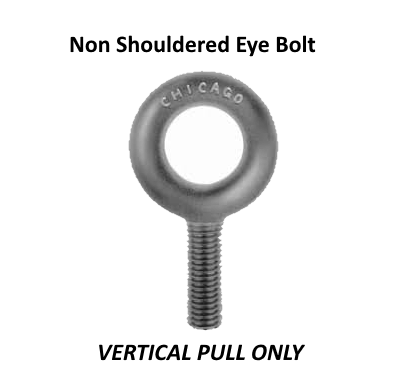
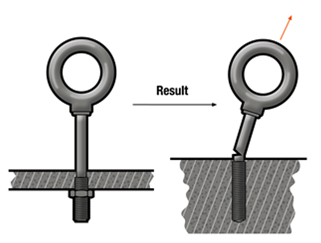
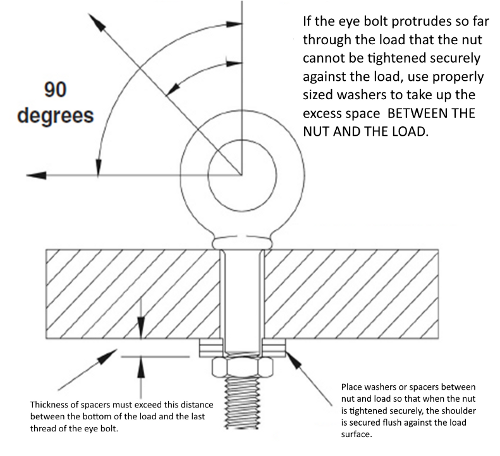
EYEBOLTS MAXIMUM TEMPERATURE 275°
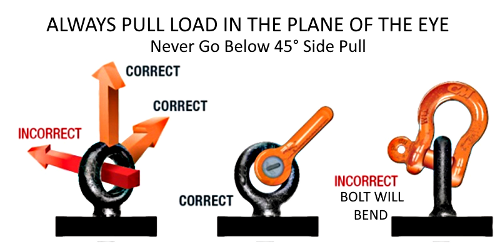
THIS IS A SHOULDERED EYEBOLT IT CAN BE PULLED IN THE PLANE OF THE EYE AT NO GREATER THAN 45° AND HAS ONLY 25% OF ITS CAPACITY

| Size (in.) | WORKING LOAD LIMIT (lbs.) | |||
| 0° True Vertical | 75° 55% of FULL WLL | 65° 35% of FULL WLL | 45° 25% of FULL WLL | |
| 1/4x20 | 500 | 275 | 175 | 125 |
| 5/16x18 | 900 | 495 | 315 | 225 |
| 3/8x16 | 1,300 | 715 | 455 | 325 |
| 7/16x14 | 1,800 | 990 | 630 | 450 |
| 1/2x13 | 2,400 | 1,320 | 840 | 600 |
| 5/8x11 | 4,000 | 2,200 | 1,400 | 1,000 |
| 3/4x10 | 5,000 | 2,750 | 1,750 | 1,250 |
| 7/8x9 | 7,000 | 3,850 | 2,450 | 1,750 |
| 1x8 | 9,000 | 4,950 | 3,150 | 2,250 |
| 1-1/8x7 | 12,000 | 6,600 | 4,200 | 3,000 |
| 1-1/4x7 | 15,000 | 8,250 | 5,250 | 3,750 |
| 1-1/2x6 | 21,000 | 11,550 | 7,350 | 5,250 |
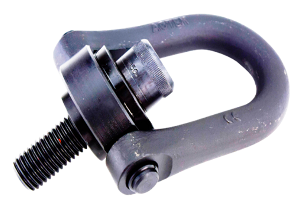
MUST BE ABLE TO ROTATE 360° AND PIVOT 180°
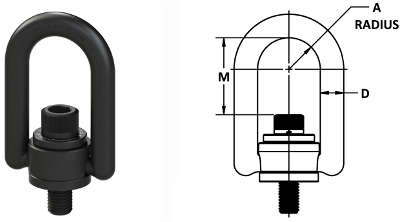
| Size (in.) | Rated Load (lbs.) | Torque Load (lbs-ft) | Dimensions (in.) | ||
| A | D | M | |||
| 1/4-20 | 500 | 5 | 0.65 | 0.44 | 1.57 |
| 5/16-18 | 800 | 7 | 0.65 | 0.44 | 1.51 |
| 3/8-16 | 1,000 | 12 | 0.65 | 0.44 | 1.45 |
| 1/2-13 | 2,500 | 28 | 1.00 | 0.75 | 2.56 |
| 5/8-11 | 4,000 | 60 | 1.00 | 0.75 | 2.44 |
| 3/4-10 | 5,000 | 100 | 1.00 | 0.75 | 2.31 |
| 3/4-10 | 7,000 | 100 | 1.00 | 1.00 | 2.31 |
| 7/8-9 | 8,000 | 160 | 1.40 | 1.00 | 3.07 |
| 1-8 | 10,000 | 230 | 1.40 | 1.00 | 2.95 |
| 1-1/4-7 | 15,000 | 470 | 1.40 | 1.00 | 3.74 |
| 1-3/8-6 | 20,000 | 670 | 2.00 | 1.25 | 3.62 |
| 1-1/2-6 | 24,000 | 800 | 2.00 | 1.25 | 3.49 |
| 2-4-1/2 | 30,000 | 800 | 2.00 | 1.25 | 3.49 |
| 2-8 | 30,000 | 800 | 2.00 | 1.25 | 3.49 |
| Rope Diameter (in.) | No. of Clips | Turnback (in.) | Torque (ft-lbs)(unlubed bolts) |
| 1/8 | 2 | 3-1/4 | 4-1/2 |
| 3/16 | 2 | 3-3/4 | 7-1/2 |
| 1/4 | 2 | 4-3/4 | 15 |
| 5/16 | 2 | 5-1/4 | 30 |
| 3/8 | 2 | 6-1/2 | 45 |
| 7/16 | 2 | 7 | 65 |
| 1/2 | 3 | 11-1/2 | 65 |
| 9/16 | 3 | 12 | 95 |
| 5/8 | 3 | 12 | 95 |
| 3/4 | 4 | 618 | 130 |
| 7/8 | 4 | 20 | 225 |
| 1 | 5 | 26 | 225 |

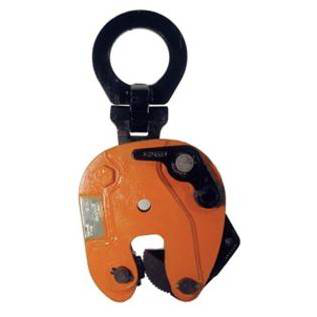
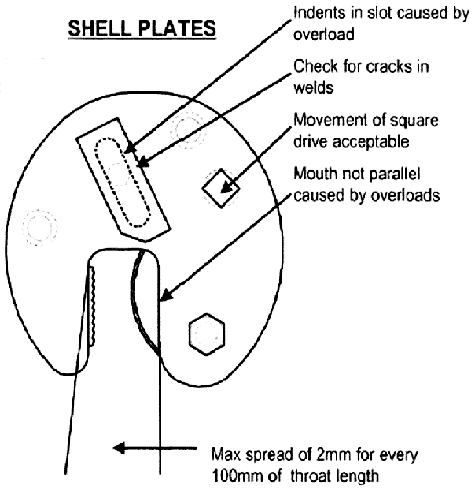
BOLTS: All bolts should have sufficient plain length to pass through half the component. Check integrity & tightness.
NUTS: All nuts when tightened should have 2 threads protruding. All nits should be locked with Loctite grade 270, nylon insert, or self-cleaving. Check for integrity & tightness.
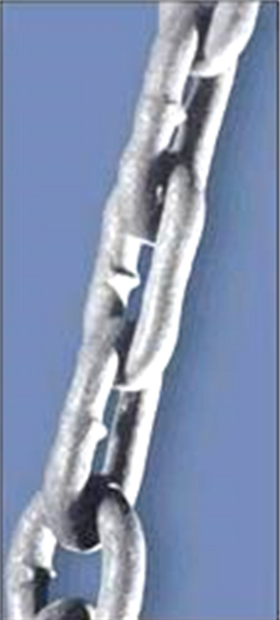
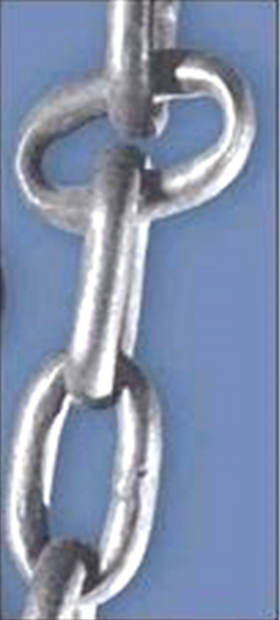
CHAIN: All chain should be tested in accordance with ASME B30.9 recommendations.
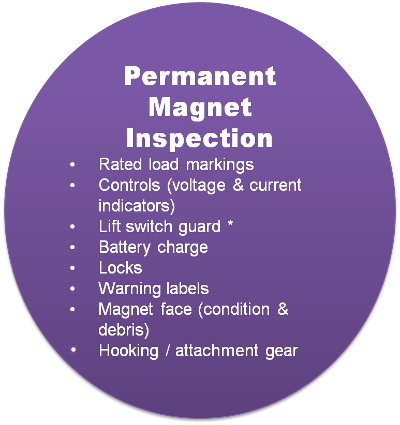
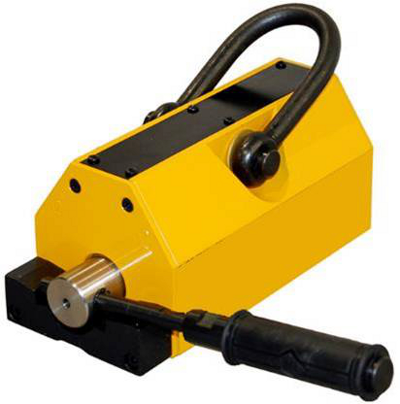
There have been recent changes to magnet inspections and testing that everyone needs to be aware of. The ASME 820.20-2018 standard states Lifting Magnets should have an annual Breakaway Test to verify the magnet meets its design factor.

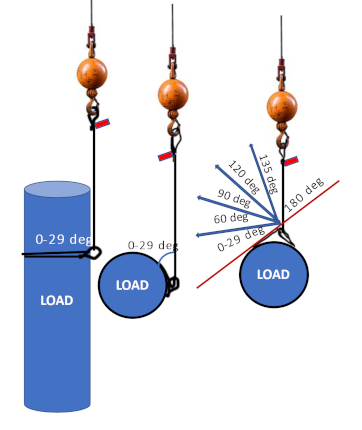
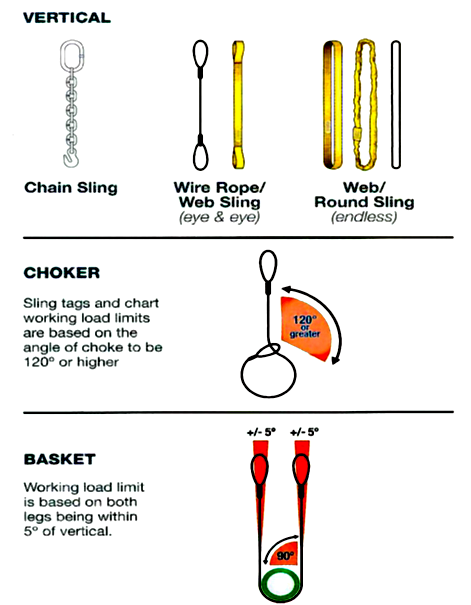
| Angle of Choke | Rated Capacity |
| Over 120° | 100% |
| 90° - 120° | 87% |
| 60° - 89° | 74% |
| 39° - 59° | 62% |
| 0 - 29° | 49% |

Maximum angle for 2 slings in a choke
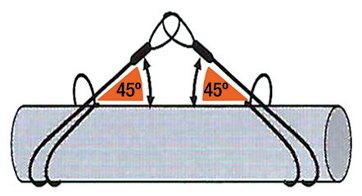
Maximum angle for 2 slings in a double wrapped choke
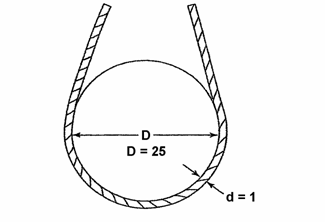
GENERAL NOTE: When D is 25 times the component rope diameter (d), the D/d ratio is expressed as 25/1.
| D/d Ratio | Capacity |
| 25/1 | 100% |
| 20/1 | 92% |
| 10/1 | 86% |
| 4/1 | 75% |
| 2/1 | 65% |
| 1/1 | 50% |

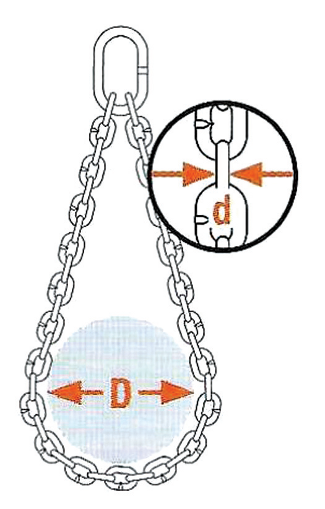
| D/d Ratio | Capacity |
| 6/1 | 100% |
| 5/1 | 90% |
| 4/1 | 80% |
| 3/1 | 70% |
| 2/1 | 60% |
| 1/1 | Not Recommended |
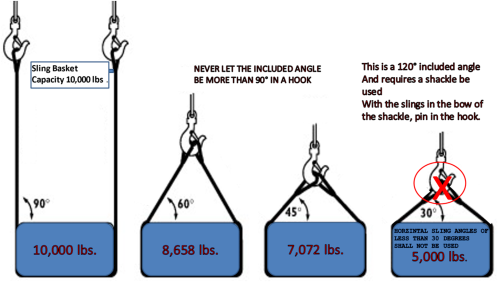
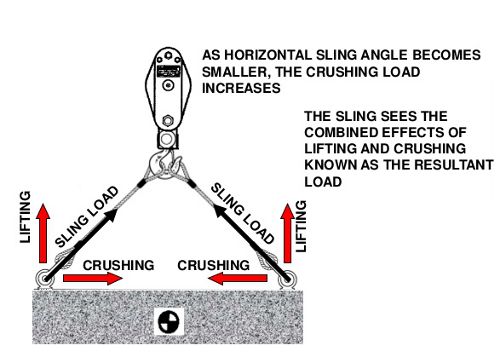

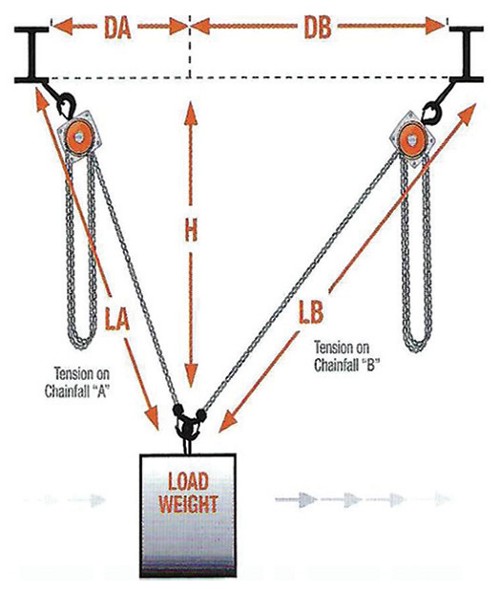
This tension is also referred to as the
LOAD ANGLE FACTOR (L.A.F.)
IT IS CALCULATED BY DIVIDING THE S OR SLING LENGTH BY THE H OR HEIGHT TO THE SAME POINT ON THE SLING
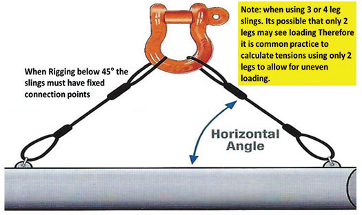
Since 30° is the lowest horizontal sling angle that you can use when rigging, the horizontal angles on this table below start at 30°
| Horizontal Angle | Load Angle Factor |
| 30° | 2 |
| 35° | 1.742 |
| 40° | 1.555 |
| 45° | 1.414 |
| 50° | 1.305 |
| 55° | 1.221 |
| 60° | 1.155 |
| 65° | 1.104 |
| 70° | 1.064 |
| 75° | 1.035 |
| 80° | 1.015 |
| 85° | 1.004 |
| 90° | 1 |
Multiple slings within the body of the shackle shall not exceed 120° included angle
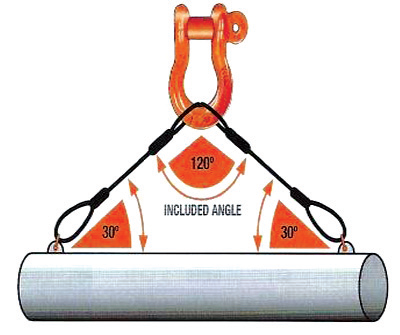
The maximum included angle with two or more slings is listed below for hooks, master links and shackles.
| Connections | ||
 |  |  |
| Hooks 90° | Master links 120° | Shackles 120° |

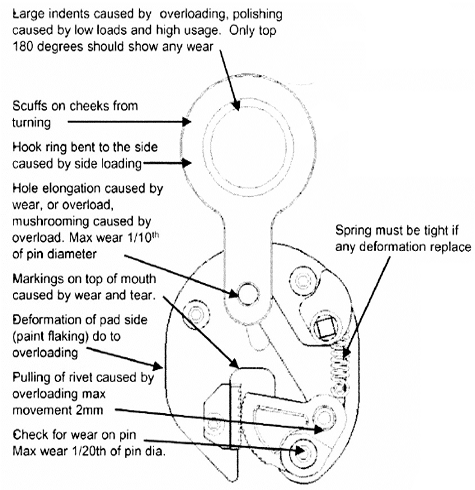
Hooks having any of the following conditions shall be removed from service until repaired or replaced:
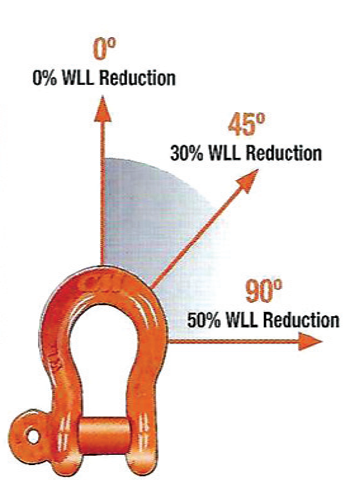
| Angles in Degrees | Working Load Limit Reduction |
| 0° to 10° | 0% |
| 11° to 20° | 15% |
| 21° to 30° | 25% |
| 31° to 45° | 30% |
| 46° to 55° | 40% |
| 56° to 70° | 45% |
| 71° to 90° | 50% |
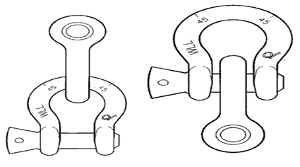
Shackles can be connected together, or point loaded

Always attach the slings to the bow of the shackle, pin in the hook
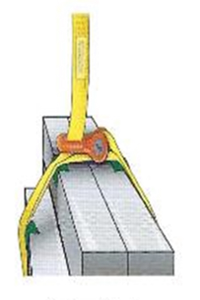
The bow of the shackle should always be in the running part of the sling pin in the eye of the sling
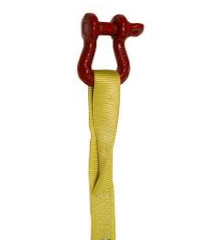
When using a single sling, load should stay centered or capacity reductions are necessary

When using in a wire rope sling always use the next size larger
The shackle must be the next size larger than the wire rope sling diameter to achieve full capacity of the sling
ASME B30.26 has the following statement regarding screw pin shackles:
The screw pin threads shall be fully engaged and tight and the shoulder should be in contact with the shackle body.
Thus, contrary to popular belief, you should never back off the screw pin before use. The shackle pin should be a minimum of hand tight before the lift begins.
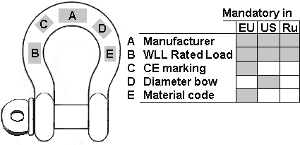

Shackles are designed and rated for in-line applied tension. You can attach multiple slings in the body of the shackle without reducing the capacity, provided that the shackle is symmetrically loaded and the included angle does not exceed 120°.

| Size (in.) | WLL (tons) | WLL (lbs.) | Pin Diameter (in.) | W dim. (in.) |
| 3/16 | 1/3 | 667 | 0.25 | 0.38 |
| 1/4 | 1/2 | 1,000 | 0.31 | 0.47 |
| 5/16 | 3/4 | 1,500 | 0.38 | 0.53 |
| 3/8 | 1 | 2,000 | 0.44 | 0.66 |
| 7/16 | 1-1/2 | 3,000 | 0.50 | 0.72 |
| 1/2 | 2 | 4,000 | 0.63 | 0.84 |
| 5/8 | 3-1/4 | 6,500 | 0.75 | 1.06 |
| 3/4 | 4-3/4 | 9,500 | 0.88 | 1.28 |
| 7/8 | 6-1/2 | 13,000 | 1.00 | 1.44 |
| 1 | 8-1/2 | 17,000 | 1.13 | 1.72 |
| 1-1/8 | 9-1/2 | 19,000 | 1.25 | 1.84 |
| 1-1/4 | 12 | 24,000 | 1.38 | 2.03 |
| 1-3/8 | 13-1/2 | 27,000 | 1.50 | 2.25 |
| 1-1/2 | 17 | 34,000 | 1.63 | 2.41 |
| 1-5/8 | 20 | 40,000 | 1.75 | 2.66 |
| 1-3/4 | 25 | 50,000 | 2.00 | 2.94 |
| 2 | 35 | 70,000 | 2.25 | 3.28 |
| 2-1/2 | 55 | 110,000 | 2.75 | 4.13 |
| 3 | 85 | 170,000 | 3.25 | 5.00 |
| 3-1/2 | 120 | 240,000 | 3.75 | 5.50 |
Shackles can be used to connect slings | WARNING NEVER TIE SLINGS TOGETHER OR DIRECTLY TO LIFTING BOLTS/LUGS |
 |  |
It's the user's responsibility to protect the sling from the load Sharp edges and corners can cut slings causing sling failure and damage Padded material can help protect the sling Changing the corner profile can help | |
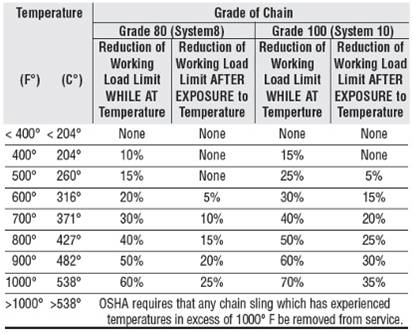
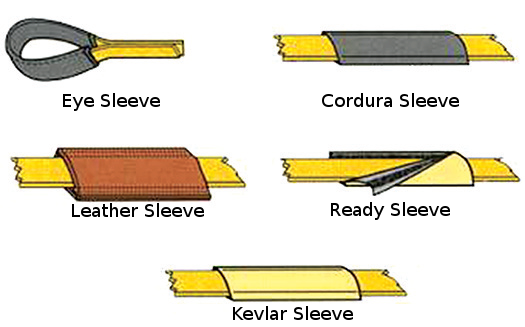
ASME B-30.9 Standard for slings states that “…Sling users SHALL be trained in the selection, inspection, cautions to personnel, effects of environment, and rigging practices…”
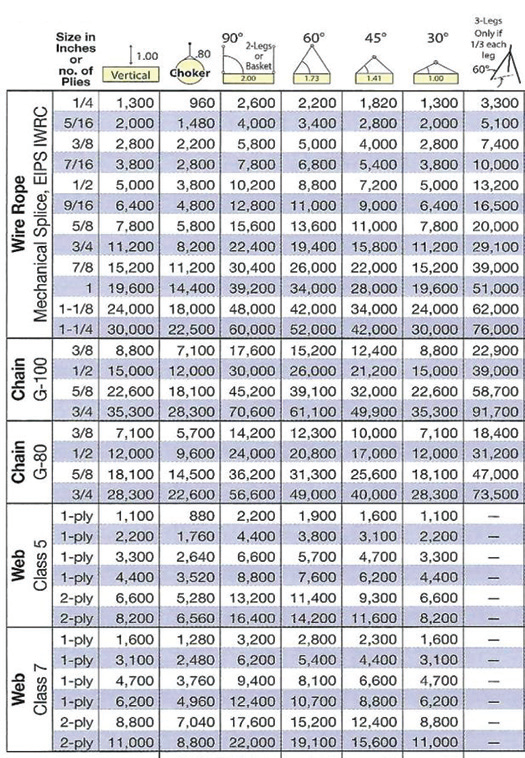
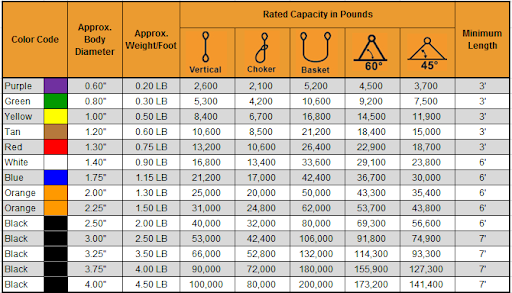
NOTE: Round sling strength is affected by the size of the connection hardware. For special applications wherein a Retained design factor of 5 is required to be maintained, contact the sling manufacturer, as a capacity reduction of 20% may be appropriate in order to satisfy this criteria.
 |  |
| Vertical Rated Capacity | Vertical | Basket |
| Minimum Shackle Size Required | ||
| 2,600 | 1/2" | 3/4" |
| 5,300 | 3/4" | 1" |
| 8,400 | 7/8" | 1-3/8" |
| 10,600 | 1" | 1-1/2" |
| 13,200 | 1-1/4" | 1-5/8" |
| 16,800 | 1-3/8" | 1-3/4" |
| 21,200 | 1-1/2" | 2" |
| 25,000 | 1-5/8" | 2-1/2" |
| 31,000 | 1-3/4" | 2-1/2" |
| 40,000 | 2" | 2-3/4" |
| 53,000 | 2-1/2" | 3" |
| 66,000 | 2-1/2" | 3-1/2" |
| 90,000 | 3" | 4" |

NOTE: Round sling strength is affected by the size of the connection hardware. For special applications wherein a Retained design factor of 5 is required to be maintained, contact the sling manufacturer, as a capacity reduction of 20% may be appropriate in order to satisfy this criteria.

网络攻击者深谙用户心理,他们通常将恶意代码捆绑在破解激活器中。安全报告明确指出,许多盗版和破解版本的软件都包含恶意内容,可能导致恶意软件感染、凭据被盗、加密矿工植入、会话劫持、软件被破坏,甚至勒索软件攻击。这类激活工具(如 activate.exe )往往是木马病毒的载体,一旦运行,可能立即下载并植入更多危险负载。
Online searches reveal multiple sources offering cracked PLECS versions, including:
The current packages support Windows, macOS, and Linux. Once you have a valid license file: Standalone: Download the package and follow the installation guide
If you need a permanent simulation solution without a paid license, consider these reputable, free-to-use power electronics simulators: Official Link SPICE-based Circuit-level waveforms & transient analysis Analog Devices Micro-Cap SPICE-based General analog circuit design (Now completely free) Spectrum Software OpenModelica Equation-based Complex, multi-domain system modeling OpenModelica Org Release Notes - Plexim plecs crack updated
: PLECS is a high-precision tool. Cracked versions often suffer from calculation errors, frequent crashes, or incompatibility with newer MATLAB versions, rendering your simulations unreliable.
The search for "cracks" often begins as a search for convenience. Given the software's high cost, it's not surprising that some users seek unofficial, free versions. This demand has led to the creation of numerous websites, forums, and torrents offering various "cracked" versions of PLECS. These include standalone executable patches and "green" (portable) editions designed to bypass licensing verification.
While third-party sites offer files labeled "plecs crack updated," these downloads frequently contain malware, ransomware, or unstable code that corrupts design data. The search for "cracks" often begins as a
: Discuss the shift from centralized distribution to distributed generation in power electronics [21]. Problem Statement
The term "plecs crack updated" could refer to recent breakthroughs in pleco breeding, such as the discovery of new species, advancements in captive breeding techniques, or the development of novel color morphs. It might also allude to the community's shared excitement and rapid dissemination of information regarding these updates, facilitated by online forums, social media, and specialized aquarist networks.
The websites hosting updated crack files are rarely safe. Download links often install trojans, spyware, or ransomware that can encrypt your files, steal personal data, or harvest login credentials. Download links often install trojans
When you use a legitimate PLECS license, you gain more than just software access:
: In the wild, plecos inhabit freshwater environments, ranging from fast-flowing streams to stagnant swamps. Their natural habitats are typically characterized by dense vegetation and submerged structures.
: Unofficial versions of engineering software often contain hidden scripts. Researchers have frequently identified Trojans and ransomware bundled with "cracked" license managers.
Many websites promise a working license key if you complete a survey or download a mobile app. These are scams designed to generate advertising revenue for the site owner while wasting your time. 3. Broken Simulations and Bad Data
OSHA SAY’S IT’S USERS RESPONSIBILITY TO STAY OUT OF THE WAY OF THE LOADTHE CLOSEST YOU SHOULD GET IS ARMS REACH |  |
It is important that the CG is directly under the crane hook.
STABLE
The hook lift point is directly above the CG.
Lift points are ABOVE the CG.
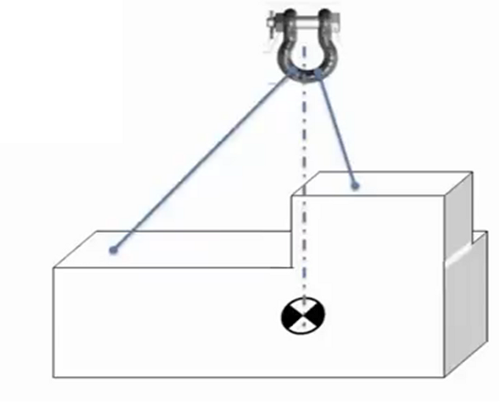
Smooth, steady application of lifting force
THIS IS WHAT CAN HAPPEN IF YOU WRAP THE CHAIN AROUND THE LOAD
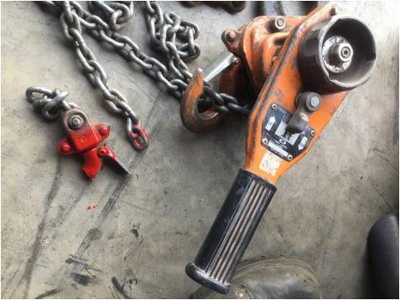
THESE HOISTS ARE ONLY MADE FOR A STRAIGHT PULL
USE SLINGS AROUND THE OBJECT BEING LIFTED
Hooks shall be equipped with latches unless use of the latch creates a hazardous condition