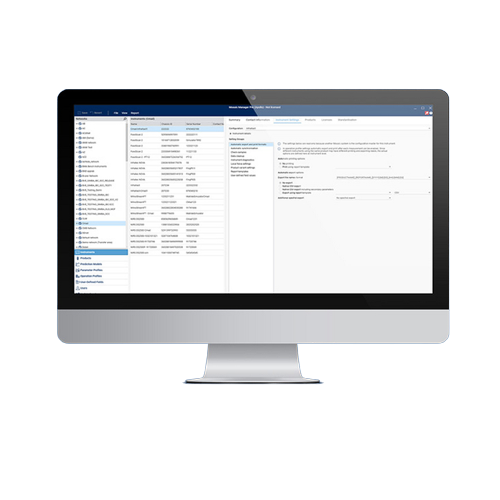
Rational Acoustics Smaart V7211 Windows Better Instant
The latest version of SMAART boasts a range of significant updates and enhancements. Some of the key new features include:
Perhaps the biggest game-changer, this allowed Smaart to automatically measure and adjust the delay for every transfer function measurement cycle, enabling "live" tracking as the microphone moved. MTW FFT (Multi-Time Window):
Smaart v7.2.1.1 on Windows utilizes the Win32 memory management model. When the software launches, it requests fixed, contiguous blocks of virtual memory for its measurement queues via VirtualAlloc . rational acoustics smaart v7211 windows better
: One of the most significant updates for Windows users was the refined handling of WAV/WDM and ASIO drivers
While Smaart runs on macOS, the Windows environment offers specific advantages when pairing with v7.2.1.1: The latest version of SMAART boasts a range
While newer versions like Smaart v9 Suite offer advanced tools, the v7.2.1.1 build remains legendary for several distinct reasons:
In the professional live sound and acoustic analysis industry, is the undisputed gold standard for system measurement, optimization, and acoustic analysis. For years, engineers have utilized this software platform to tune massive stadium rigs, align complex speaker arrays, and troubleshoot phase and frequency issues. When the software launches, it requests fixed, contiguous
The "better" performance associated with v7.2.1.1 on Windows is generally attributed to the following refinements:
This mode measures how a system or room reacts to a sudden burst of energy (an impulse). By deconvolving a swept sine wave test signal, v7 calculates the Impulse Response (IR), which can be used to generate the . This is a primary tool for:
To balance a sound system, you must compare the music leaving the console with the sound hitting the mic. The Windows ASIO engine guarantees that these two signals line up perfectly in time. This gives you precise magnitude, phase, and coherence data. Comparison: Smaart v7.2.1.1 vs. Modern Smaart Suite