epanet-js
No installs. No forced cloud storage. Just fast, local-first water modeling — powered by the engine you already trust.
You shouldn't have to choose between speed, security, and affordability just to understand your water networks.


To ensure campaigns are helpful and not harmful, organizations prioritize :
The human spirit possesses an extraordinary capacity to endure, heal, and transform. Across the globe, individuals who have faced profound trauma—ranging from cancer diagnoses and domestic violence to human trafficking and severe mental health crises—are stepping into the spotlight. They are transitioning from victims to survivors, and ultimately, to advocates.
Share content from verified advocacy groups. Avoid sharing graphic details or unverified rumors. A simple share of a helpline number or a survivor’s essay (with permission) can save a life. Slave Kas - Gang Rape Babys Third Gangbang.avi
There is a fine line between honoring a survivor’s journey and exploiting their pain for clicks or donations. Campaigns must focus not just on the details of the trauma, but on the survivor's agency, systemic context, and the path forward. Combating Compassion Fatigue
Integrating survivor stories into a public campaign requires careful strategic planning to ensure the message is both impactful and ethical. Successful campaigns generally rely on four foundational pillars. 1. Ethical Stewardship and Informed Consent To ensure campaigns are helpful and not harmful,
Survivor stories and awareness campaigns are powerful tools for healing and social change. Below are several post templates tailored for different platforms and tones, ranging from personal narratives to community-driven action. Option 1: The "Strength in Numbers" Awareness Post Instagram (with a carousel of photos) or Facebook.
At the core of every impactful awareness campaign is a psychological phenomenon known as narrative transportation. When an audience encounters a well-crafted story, they do not simply process information logically; they mentally enter the world of the storyteller. Share content from verified advocacy groups
If you are building a campaign or writing a piece on a specific cause, tell me:
For many, trauma is accompanied by a heavy blanket of shame or stigma. When a survivor speaks up, they give others permission to do the same. This "ripple effect" is often the first step in dismantling the culture of silence that allows issues like abuse or chronic illness to persist in the shadows. 2. Humanizing the Data
If you are building a campaign or writing a piece on a specific cause, tell me:
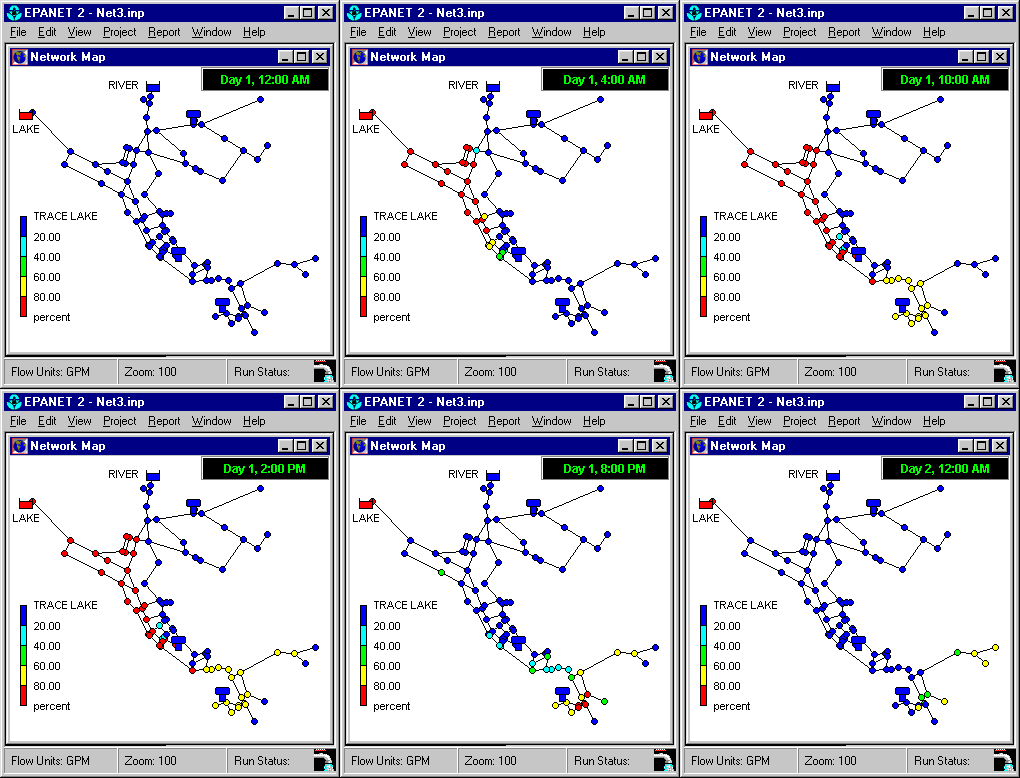
No setup or downloads — just instant access right in your browser.
EPANET was a gift to the industry — free, open-source water modeling for all. But commercial vendors built on it, locked away improvements, and left the community behind.
epanet-js is our answer: a faster, simpler, affordable water modeling tool that protects your privacy and sustains the open-source future of water modeling.
We're proud to be part of the next chapter — and we're just getting started.

When you purchase more features in epanet-js, you're investing in the future of open-source EPANET development.
Our open-source model balances innovation and accessibility:
Anyone can build on our code. The two-year commercial-use delay gives us the incentive to keep pushing forward — and that fuels progress for everyone.
That means when you support us, you support more affordable hydraulic modeling software for the entire community.
Choose the plan that works for you
Individual named license
Base cost
User
Have questions? or book a call.
Available for non-commercial projects, learning, and student work.
For curious minds and personal growth.
Free for students and teachers.
Find answers to common questions about epanet-js.
No install. No login. No cloud required.
You may not know this, but for decades, the U.S. EPA has given the water industry an extraordinary gift: the free and open-source hydraulic modeling software EPANET. Odds are, if you've used any commercial hydraulic modeling software today, it was built on the EPANET engine.
The problem is, instead of giving back to their open-source roots like other industries do, big-name software vendors took EPANET's open code, built private tools on top of the engine, and then locked those improvements behind patents and proprietary licenses.
Some vendors even pressured the EPA to focus only on the engine — discouraging any effort to improve the interface or user experience for everyone else.
Those vendors now charge you exorbitant prices to use their software while EPANET lags behind — and utilities, engineers, and educators with smaller budgets suffer.
We think this is backwards — and we're on a mission to change it. We're focused on creating a better experience for the entire hydraulic modeling community.
That's why we built epanet-js under an FSL license — because we want to give you an affordable, easy-to-use water modeling option that creates a sustainable future for open-source EPANET development.
Support EPANET by using software that supports it back.
Simple, quick, and useful right out of the gate — designed to open-and-go.
Launch epanet-js now