
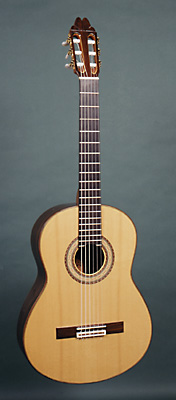
Welcome to the fantastic world of classical guitar. In this site, you will find classical guitar pieces, in midi format, for one and more guitars: actually 5641 MIDI files from 96 composers. Information on how to create midi files and a tutorial on the tablature notation system is presented. Images of ancient guitars provided.
|
|
When a Philips TV powers on, its basic input/output system searches connected USB ports for this specific file name. If detected under the correct conditions, the hardware halts the standard boot sequence and forces a complete overwrite of the onboard flash memory. This process eliminates system-level corruption, removes broken cache files, and restores factory-fresh software architecture. When Is It Needed?
Always download firmware directly from the official . Ensure the model number is an exact match. Do not unplug the TV while the update is in progress. To make this report more useful, please let me know: What is the exact model number of your Philips TV?
The Ultimate Guide to Philips TV Recovery: Mastering the upgrade_loader.pkg
Plug the TV back into power. Do press any buttons on the remote or the TV.
Keeps user data, installed applications, and channel setups.
Standard updates often use an autorun.upg file. If you have a .pkg file, it may need to be renamed precisely to upgrade_loader.pkg for the TV to recognize it during a cold boot. How to Use the upgrade_loader.pkg File
In the world of television repair and maintenance, the file is often the final lifeline for a malfunctioning Philips Smart TV. This specific package serves as a "forced" firmware recovery tool, designed to resurrect devices trapped in boot loops or experiencing severe software corruption that standard over-the-air updates cannot fix. Understanding the upgrade_loader.pkg
This method is used when the TV can power on and access its menu system but cannot perform a standard autorun.upg update.
The (or sometimes just upgrade.pkg ) is a critical firmware file used for forced software updates on Philips TVs, typically as a "last resort" rescue method. Unlike standard autorun.upg updates, this method can bypass boot loops or revive a TV that is stuck on the Philips logo. When to Use This Method
Only use this method if the standard menu-based update via the Philips Support site fails.
| Problem | Likely Cause | Potential Solution | | :--- | :--- | :--- | | TV doesn't detect the USB drive. | USB drive is too large, not FAT32, or inserted into USB 3.0 port. | Use a smaller USB 2.0 drive (1GB-8GB), ensure it's formatted to FAT32, and try different USB ports. | | Update starts but fails halfway. | Corrupted download or incompatible file. | Delete the file, re-download from the official Philips support page, and repeat the process. | | TV remains "bricked" (unresponsive). | Wrong chassis file or hardware failure. | Double-check your chassis number and attempt the update again. If it still fails, the issue may be hardware-related (e.g., failing eMMC memory). |
Composers are grouped in 6 pages: A-B;
C-F;
G-L;
M-O;
P-R; S-Z .
J.-S.
Bach , A.
Barrios Mangore , N. Coste
, M. Giuliani , F.
Sor and F.
Tarrega are on their own page
Click here
to listen to 20 great MIDI from the site
Composers in alphabetical order
When a Philips TV powers on, its basic input/output system searches connected USB ports for this specific file name. If detected under the correct conditions, the hardware halts the standard boot sequence and forces a complete overwrite of the onboard flash memory. This process eliminates system-level corruption, removes broken cache files, and restores factory-fresh software architecture. When Is It Needed?
Always download firmware directly from the official . Ensure the model number is an exact match. Do not unplug the TV while the update is in progress. To make this report more useful, please let me know: What is the exact model number of your Philips TV?
The Ultimate Guide to Philips TV Recovery: Mastering the upgrade_loader.pkg upgradeloaderpkg philips
Plug the TV back into power. Do press any buttons on the remote or the TV.
Keeps user data, installed applications, and channel setups. When a Philips TV powers on, its basic
Standard updates often use an autorun.upg file. If you have a .pkg file, it may need to be renamed precisely to upgrade_loader.pkg for the TV to recognize it during a cold boot. How to Use the upgrade_loader.pkg File
In the world of television repair and maintenance, the file is often the final lifeline for a malfunctioning Philips Smart TV. This specific package serves as a "forced" firmware recovery tool, designed to resurrect devices trapped in boot loops or experiencing severe software corruption that standard over-the-air updates cannot fix. Understanding the upgrade_loader.pkg When Is It Needed
This method is used when the TV can power on and access its menu system but cannot perform a standard autorun.upg update.
The (or sometimes just upgrade.pkg ) is a critical firmware file used for forced software updates on Philips TVs, typically as a "last resort" rescue method. Unlike standard autorun.upg updates, this method can bypass boot loops or revive a TV that is stuck on the Philips logo. When to Use This Method
Only use this method if the standard menu-based update via the Philips Support site fails.
| Problem | Likely Cause | Potential Solution | | :--- | :--- | :--- | | TV doesn't detect the USB drive. | USB drive is too large, not FAT32, or inserted into USB 3.0 port. | Use a smaller USB 2.0 drive (1GB-8GB), ensure it's formatted to FAT32, and try different USB ports. | | Update starts but fails halfway. | Corrupted download or incompatible file. | Delete the file, re-download from the official Philips support page, and repeat the process. | | TV remains "bricked" (unresponsive). | Wrong chassis file or hardware failure. | Double-check your chassis number and attempt the update again. If it still fails, the issue may be hardware-related (e.g., failing eMMC memory). |
Note to MIDI sequence contributors
Your submissions are welcomed.
Please send them by e-mail (end of text). Pieces
should bear the composer's name and be properly identified.(ex.: J.K. Mertz (1806-1856) Nocturne
Op.4 No.2.). The submissions
should bear information on the transcriber or arranger when available. The submitter's name
will appear beside the accepted submission.
This site exists primarily to showcase pieces written for the classical
guitar. Established and recognized transcriptions and arrangements (e.g.,
Tarrega, Segovia,..) of pieces written by non-guitar composers will also be given
high priority.
New compositions for the classical guitar are also welcomed. New
compositions that meet quality guidelines will be added to the site. For
new contributors, it would be appreciated if you would also submit several
pieces by known composers in addition to your own compositions. This will
help to expand the repertoire of established works for the classical guitar in
addition to expanding the repertoire of new music.
Last update: March 8 2026
Copyright François Faucher 1998-2025
 G.F.Handel's Sonata 2. Allegro
3.Adagio HWV368
G.F.Handel's Sonata 2. Allegro
3.Adagio HWV368